QUESTION IMAGE
Question
an overview of quality dementia care
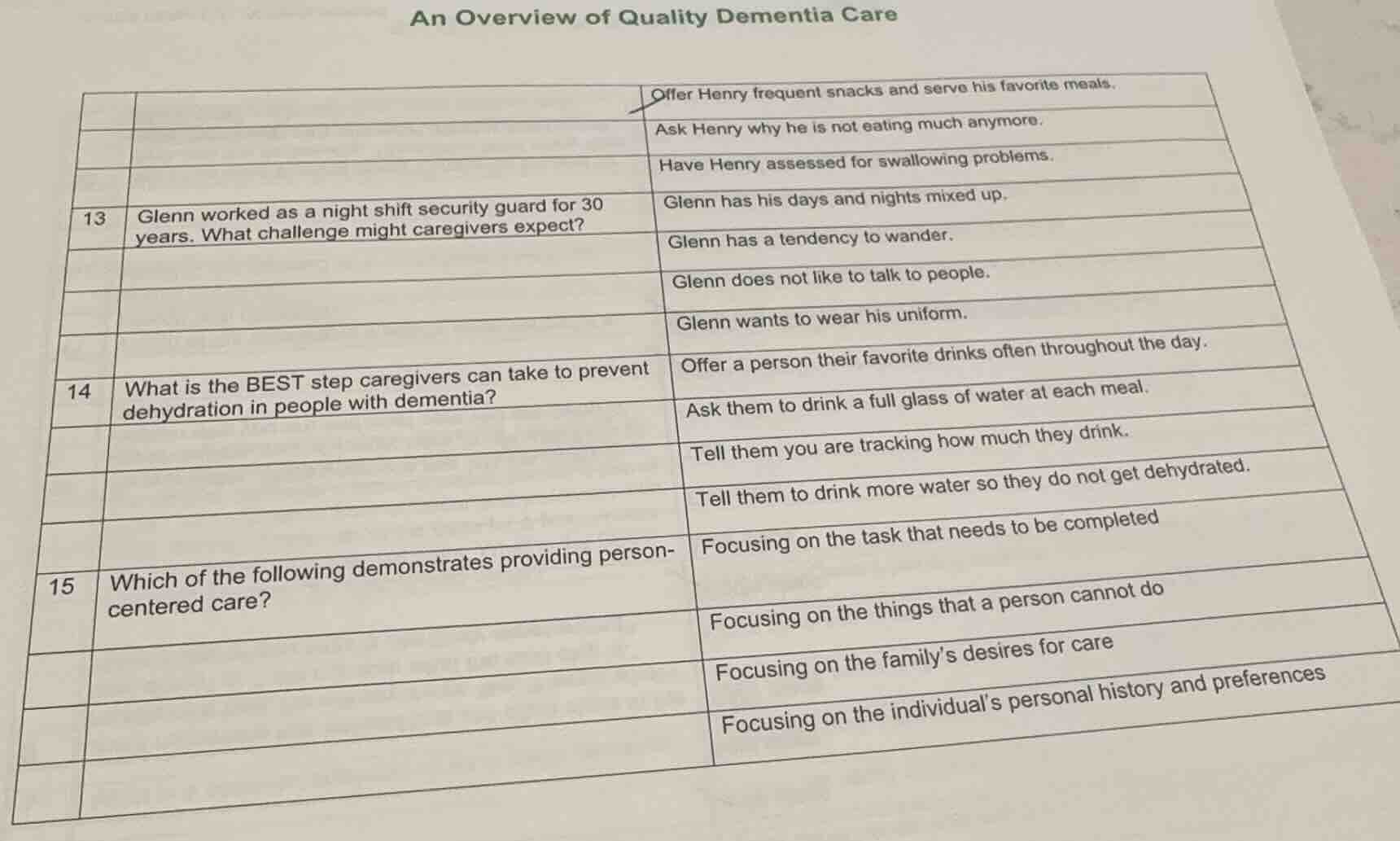
13 glenn worked as a night shift security guard for 30 years. what challenge might caregivers expect?
glenn has his days and nights mixed up.
glenn has a tendency to wander.
glenn does not like to talk to people.
glenn wants to wear his uniform.
14 what is the best step caregivers can take to prevent dehydration in people with dementia?
offer a person their favorite drinks often throughout the day.
ask them to drink a full glass of water at each meal.
tell them you are tracking how much they drink.
tell them to drink more water so they do not get dehydrated.
15 which of the following demonstrates providing person-centered care?
focusing on the task that needs to be completed
focusing on the things that a person cannot do
focusing on the familys desires for care
focusing on the individuals personal history and preferences
Analyze Glenn's shift history
Glenn worked as a night shift security guard for 30 years. In individuals with dementia, long-term habits and occupational history heavily influence their behaviors and internal clock. A person who spent decades awake at night and asleep during the day is highly likely to maintain or revert to this circadian pattern, leading to mixed-up days and nights.
Determine best dehydration prevention
People with dementia often lose the ability to recognize thirst or communicate their need for fluids. Direct commands or asking them to drink large amounts at once (like a full glass at meals) can be overwhelming or met with resistance. Offering small, favorite drinks frequently throughout the day is a proactive, gentle strategy that encourages consistent fluid intake.
Identify person-centered care
Using the Person-Centered Care concept, care should focus on the unique individual rather than tasks, limitations, or external desires. Person-centered care prioritizes the individual's personal history, life experiences, values, and preferences to guide daily interactions and care decisions.

Snap & solve any problem in the app
Get step-by-step solutions on Sovi AI
Photo-based solutions with guided steps
Explore more problems and detailed explanations
Question 13
- (A) Glenn has his days and nights mixed up. (Correct answer)
- (B) Glenn has a tendency to wander.
- (C) Glenn does not like to talk to people.
- (D) Glenn wants to wear his uniform.
Question 14
- (A) Offer a person their favorite drinks often throughout the day. (Correct answer)
- (B) Ask them to drink a full glass of water at each meal.
- (C) Tell them you are tracking how much they drink.
- (D) Tell them to drink more water so they do not get dehydrated.
Question 15
- (A) Focusing on the task that needs to be completed
- (B) Focusing on the things that a person cannot do
- (C) Focusing on the family's desires for care
- (D) Focusing on the individual's personal history and preferences (Correct answer)