QUESTION IMAGE
Question
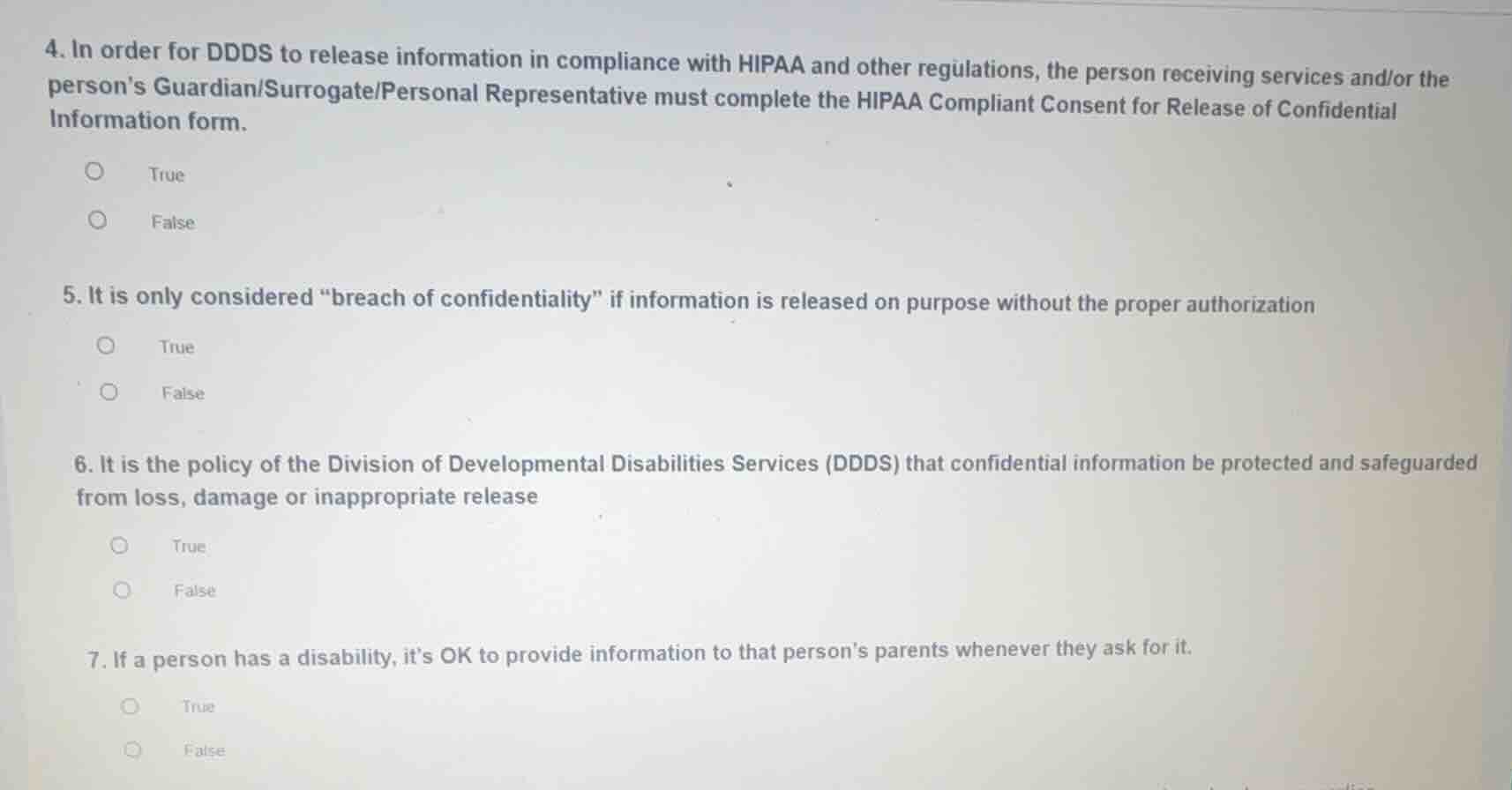
- in order for ddds to release information in compliance with hipaa and other regulations, the person receiving services and/or the persons guardian/surrogate/personal representative must complete the hipaa compliant consent for release of confidential information form.
true
false
- it is only considered \breach of confidentiality\ if information is released on purpose without the proper authorization
true
false
- it is the policy of the division of developmental disabilities services (ddds) that confidential information be protected and safeguarded from loss, damage or inappropriate release
true
false
- if a person has a disability, its ok to provide information to that persons parents whenever they ask for it.
true
false
Question 4 Analysis
Using the HIPAA Regulations knowledge point, releasing protected health information requires a formal, signed authorization form from the individual or their legal representative. Therefore, completing the HIPAA Compliant Consent for Release of Confidential Information form is mandatory.
Question 5 Analysis
Using the Confidentiality Regulations knowledge point, a breach of confidentiality does not require intent. Accidental, negligent, or inadvertent disclosures of protected information without proper authorization still legally constitute a breach.
Question 6 Analysis
Using the Confidentiality Regulations knowledge point, standard healthcare and social service policies, including those of the Division of Developmental Disabilities Services (DDDS), mandate the protection and safeguarding of all confidential records from loss, damage, or unauthorized disclosure.
Question 7 Analysis
Using the Confidentiality Regulations and HIPAA Regulations knowledge points, having a disability does not automatically waive an adult's right to privacy. Information cannot be disclosed to parents without proper written consent or legal guardianship documentation.

Snap & solve any problem in the app
Get step-by-step solutions on Sovi AI
Photo-based solutions with guided steps
Explore more problems and detailed explanations
Question 4
- True (Correct answer)
- False
Question 5
- True
- False (Correct answer)
Question 6
- True (Correct answer)
- False
Question 7
- True
- False (Correct answer)