QUESTION IMAGE
Question
name:
date:
class:
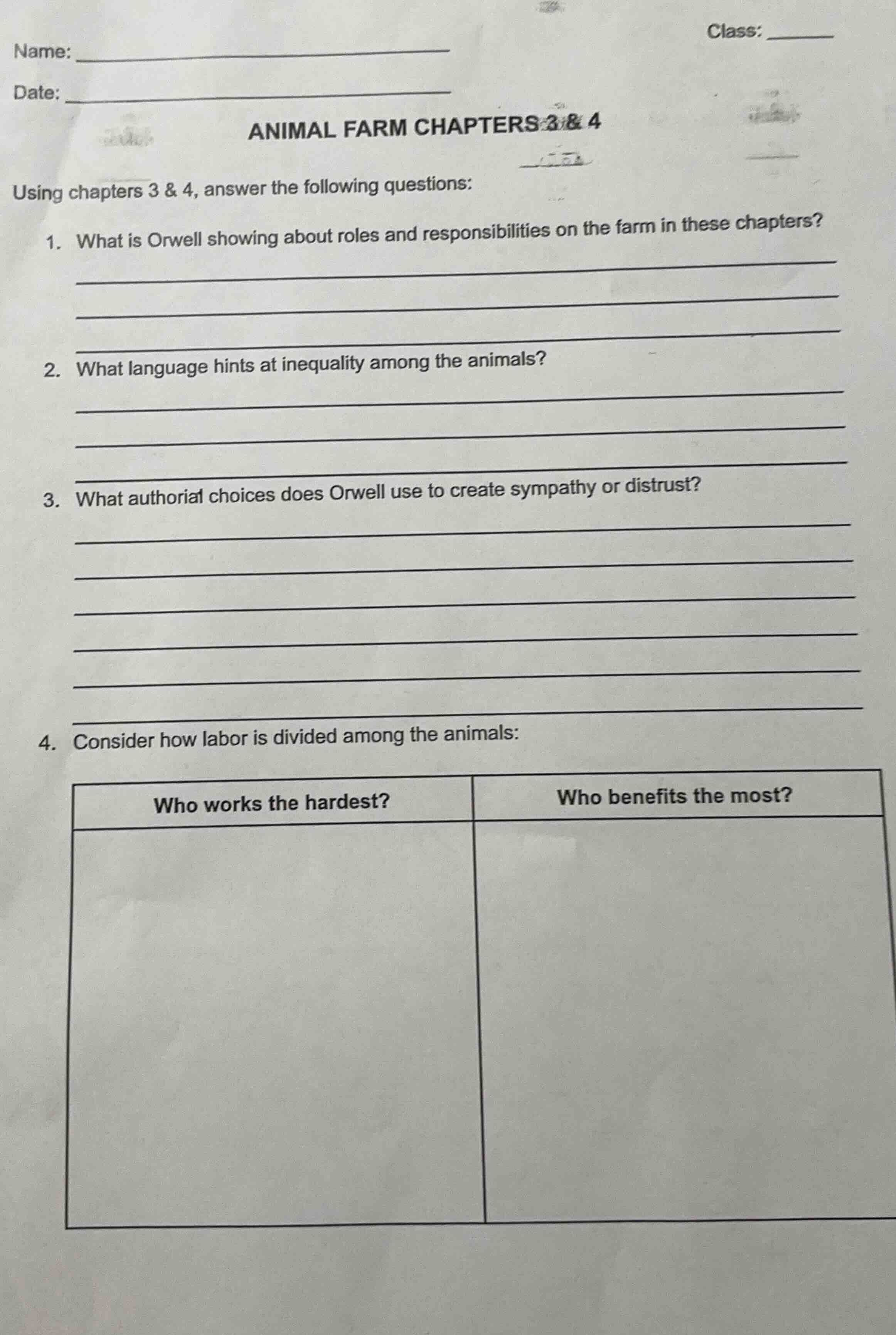
animal farm chapters 3 & 4
using chapters 3 & 4, answer the following questions:
- what is orwell showing about roles and responsibilities on the farm in these chapters?
- what language hints at inequality among the animals?
- what authorial choices does orwell use to create sympathy or distrust?
- consider how labor is divided among the animals:
who works the hardest?\twho benefits the most?
Question 1
In chapters 3 and 4 of Animal Farm, Orwell shows a division of roles based on ability and species. The pigs, like Snowball and Napoleon, take on leadership and intellectual tasks (planning, teaching, making decisions), while the horses (Boxer, Clover) do heavy labor, hens and ducks handle smaller farm tasks, and the cat is lazy. This reflects early signs of hierarchy, with pigs gaining more control and others working under their direction, hinting at the corruption of equality.
Language like “brainwork” (used by pigs to justify their lighter labor, claiming they do mental tasks), and the pigs’ appropriation of milk and apples (with Squealer’s argument that they “need” them for leadership) hints at inequality. Also, the pigs’ use of “comrades” while acting superior, and the gradual shift in how they frame their privileges (e.g., “for the good of the farm”) creates a linguistic divide between rulers (pigs) and workers (other animals).
Orwell uses characterization: Boxer’s loyalty (“I will work harder”) creates sympathy for the exploited worker. The pigs’ manipulation (Squealer’s persuasive lies, Napoleon’s authoritarian moves) fosters distrust. Symbolism (pigs as corrupt leaders, Boxer as the exploited proletariat) and irony (the “Seven Commandments” being bent, like pigs sleeping in beds) also shape empathy for the oppressed and suspicion of the pigs’ motives.

Snap & solve any problem in the app
Get step-by-step solutions on Sovi AI
Photo-based solutions with guided steps
Explore more problems and detailed explanations
Orwell shows a hierarchical division of roles: pigs (Napoleon, Snowball) lead/plan, Boxer/Clover do heavy labor, smaller animals (hens, ducks) do minor tasks, and the cat is idle. This hints at emerging inequality as pigs gain control while others work, undermining the “All Animals Are Equal” ideal.