QUESTION IMAGE
Question
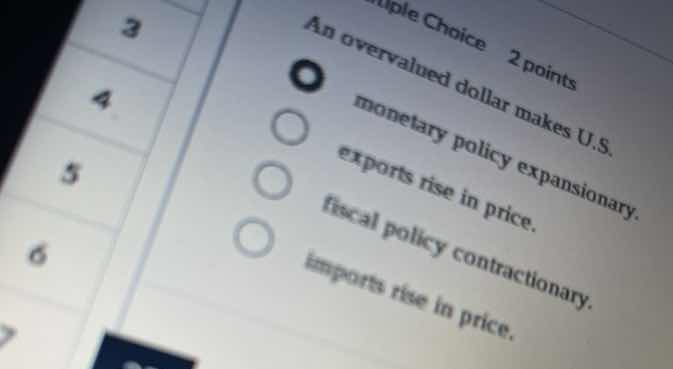
multiple choice 2 points
an overvalued dollar makes u.s.
monetary policy expansionary.
exports rise in price.
fiscal policy contractionary.
imports rise in price.
Analyze the effect of an overvalued dollar
An overvalued currency means its foreign exchange value is higher than its equilibrium or purchasing power parity level. This makes domestic goods relatively more expensive for foreign buyers and foreign goods relatively cheaper for domestic buyers.
Evaluate the options
- "monetary policy expansionary": Currency valuation is a result of monetary policy, not a direct cause that makes policy expansionary.
- "exports rise in price": Because the dollar is overvalued, foreigners must exchange more of their currency to buy a dollar, which directly increases the price of U.S. exports in foreign markets.
- "fiscal policy contractionary": Currency valuation does not directly dictate the stance of fiscal policy.
- "imports rise in price": An overvalued dollar increases purchasing power abroad, making foreign imports cheaper, not more expensive.

Snap & solve any problem in the app
Get step-by-step solutions on Sovi AI
Photo-based solutions with guided steps
Explore more problems and detailed explanations
- (A) monetary policy expansionary.
- (B) exports rise in price. (Correct answer)
- (C) fiscal policy contractionary.
- (D) imports rise in price.