QUESTION IMAGE
Question
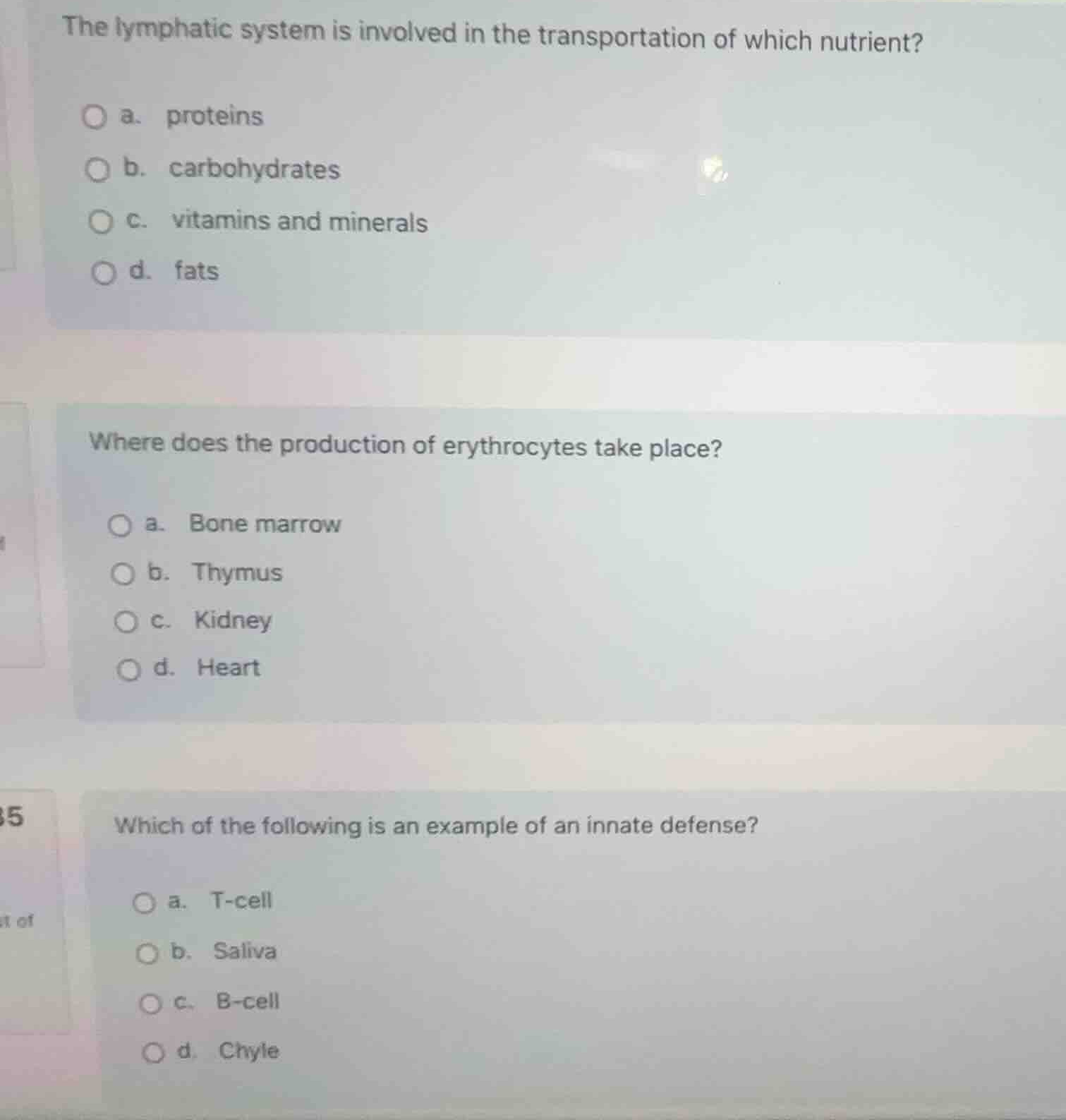
the lymphatic system is involved in the transportation of which nutrient?
a. proteins
b. carbohydrates
c. vitamins and minerals
d. fats
where does the production of erythrocytes take place?
a. bone marrow
b. thymus
c. kidney
d. heart
which of the following is an example of an innate defense?
a. t-cell
b. saliva
c. b-cell
d. chyle
Analyze lymphatic nutrient transport
The Lymphatic System plays a key role in absorbing and transporting dietary lipids (fats) from the digestive tract. Specialized lymphatic capillaries called lacteals in the small intestine absorb fat-soluble nutrients and package them into chylomicrons, which are then transported via lymph into the venous circulation. Other macronutrients like proteins and carbohydrates are absorbed directly into the bloodstream. Therefore, the lymphatic system is involved in transporting fats.
Determine the site of erythrocyte production
Erythrocytes (red blood cells) are produced through a process called erythropoiesis. In adult mammals, this process takes place primarily in the red bone marrow of flat bones and the epiphyses of long bones. The thymus is involved in T-cell maturation, the kidney produces erythropoietin (the hormone stimulating production), and the heart pumps blood but does not produce blood cells. Thus, the correct site is the bone marrow.
Identify an example of innate defense
Innate immunity represents the body's first line of defense and is non-specific. Saliva contains chemical barriers such as lysozymes and physical washing actions that prevent infection, making it a classic component of the innate immune system. In contrast, T-cells and B-cells are key components of the adaptive (acquired) immune system, which provides highly specific defense. Chyle is a milky bodily fluid containing lymph and emulsified fats, not a primary defense mechanism. Therefore, saliva is the correct example of an innate defense.

Snap & solve any problem in the app
Get step-by-step solutions on Sovi AI
Photo-based solutions with guided steps
Explore more problems and detailed explanations
Question 1
- a. proteins
- b. carbohydrates
- c. vitamins and minerals
- d. fats (Correct answer)
Question 2
- a. Bone marrow (Correct answer)
- b. Thymus
- c. Kidney
- d. Heart
Question 3
- a. T-cell
- b. Saliva (Correct answer)
- c. B-cell
- d. Chyle