QUESTION IMAGE
Question
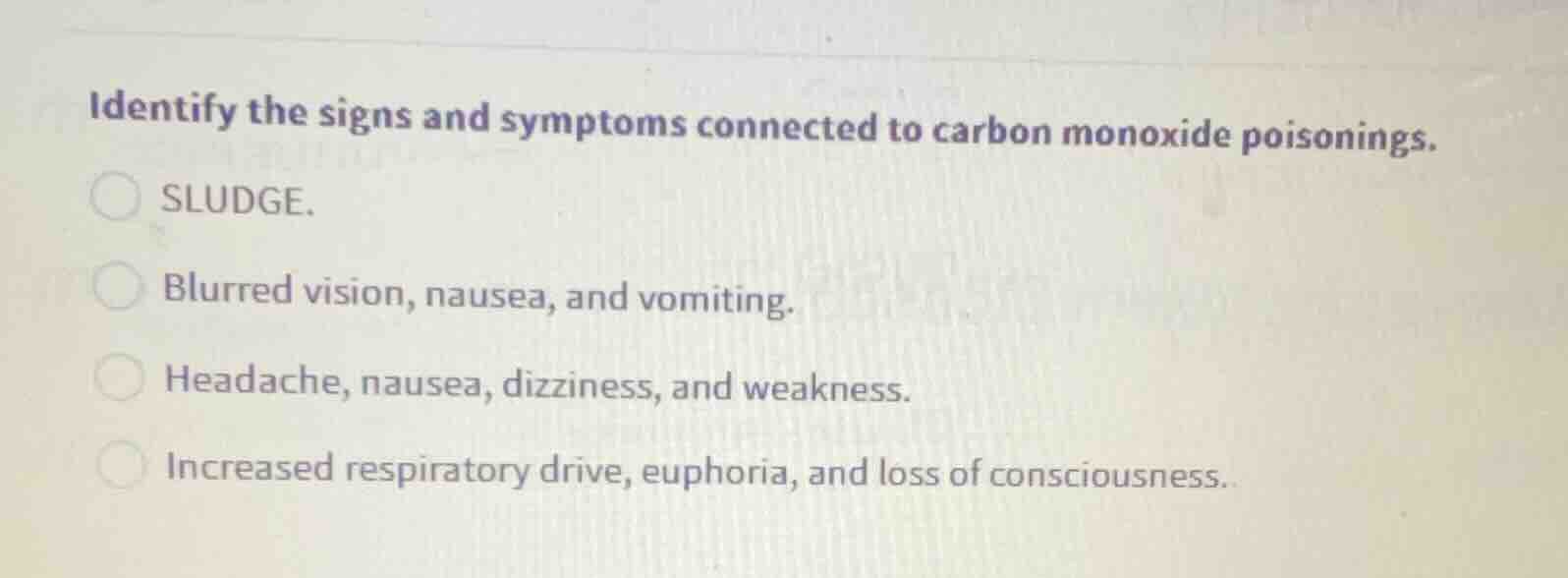
identify the signs and symptoms connected to carbon monoxide poisonings.
sludge.
blurred vision, nausea, and vomiting.
headache, nausea, dizziness, and weakness.
increased respiratory drive, euphoria, and loss of consciousness.
Analyze the physiological effects of carbon monoxide
Carbon monoxide (CO) is an odorless, colorless gas that binds to hemoglobin with a much higher affinity than oxygen, forming carboxyhemoglobin. This reduces oxygen delivery to systemic tissues, leading to cellular hypoxia. The organs with the highest metabolic demands—specifically the brain and the heart—are affected first.
Evaluate the clinical presentation of CO poisoning
As a result of systemic hypoxia, early and common symptoms of carbon monoxide poisoning are often flu-like and non-specific. These include:
- Headache (the most common presenting symptom)
- Dizziness
- Weakness
- Nausea and vomiting
- Confusion or altered mental status
This aligns with the concept of Toxicological Emergencies and Inhaled Poisons Safety protocols, where identifying early, subtle signs of inhalation hazards is critical for provider safety and patient care.
Differentiate from other options
- SLUDGE is a mnemonic (Salivation, Lacrimation, Urination, Defecation, Gastrointestinal upset, Emesis) used to describe the cholinergic toxidrome associated with organophosphate poisoning, not carbon monoxide.
- Blurred vision, nausea, and vomiting are possible but less characteristic as a primary diagnostic cluster compared to the classic presentation of headache, dizziness, and weakness.
- Increased respiratory drive, euphoria, and loss of consciousness does not accurately represent the typical early clinical presentation of CO poisoning.

Snap & solve any problem in the app
Get step-by-step solutions on Sovi AI
Photo-based solutions with guided steps
Explore more problems and detailed explanations
- SLUDGE.
- Blurred vision, nausea, and vomiting.
- Headache, nausea, dizziness, and weakness. (Correct answer)
- Increased respiratory drive, euphoria, and loss of consciousness.