QUESTION IMAGE
Question
identifica - a
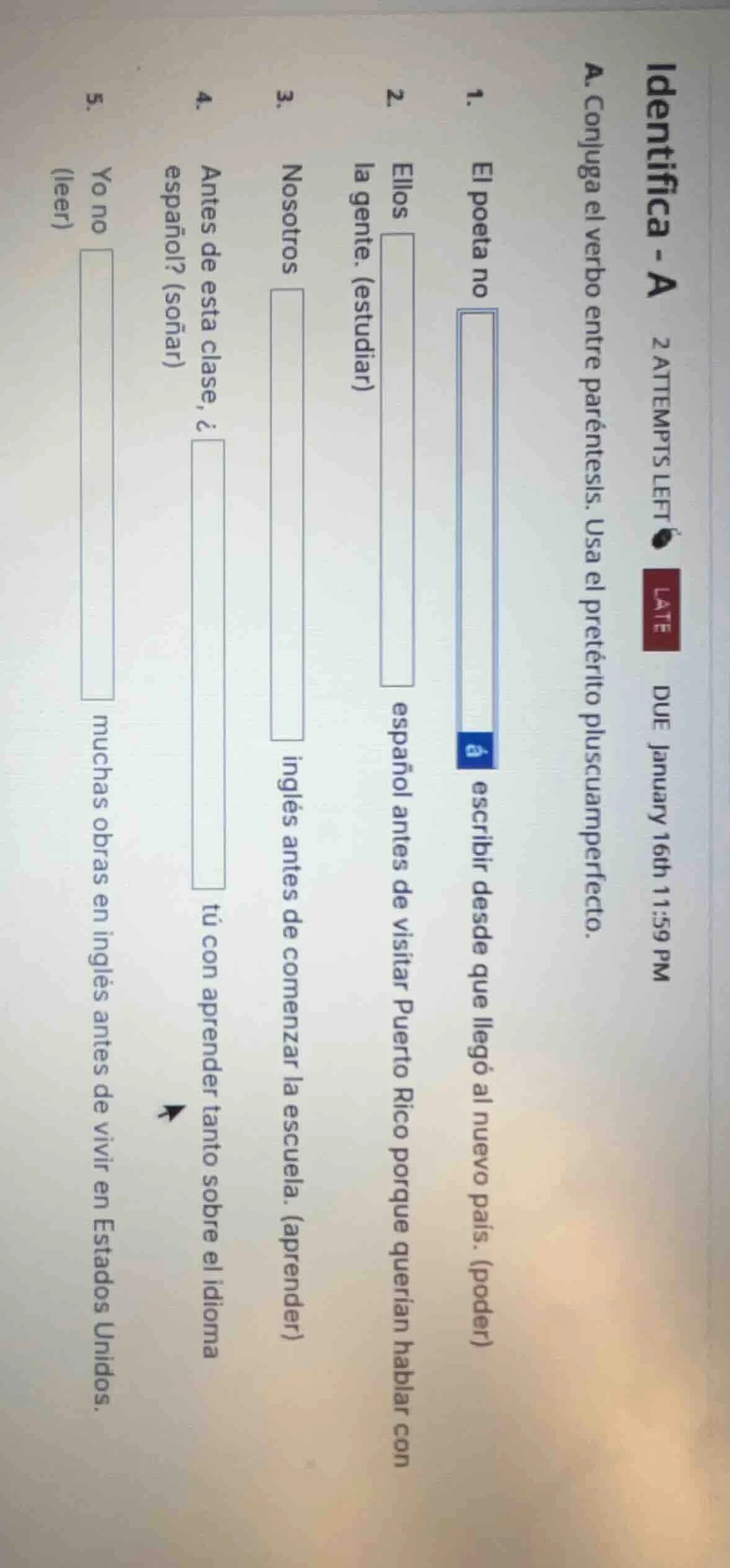
a. conjuga el verbo entre paréntesis. usa el pretérito pluscuamperfecto.
- el poeta no □ escribir desde que llegó al nuevo país. (poder)
- ellos □ español antes de visitar puerto rico porque querían hablar con la gente. (estudiar)
- nosotros □ inglés antes de comenzar la escuela. (aprender)
- antes de esta clase, □ tú con aprender tanto sobre el idioma español? (soñar)
- yo no □ muchas obras en inglés antes de vivir en estados unidos. (leer)
1.
To conjugate "poder" in the pretérito pluscuamperfecto for "el poeta" (third - person singular), we use the imperfect subjunctive of "haber" (había) and the past participle of "poder" (podido). So it's "había podido".
For "ellos" (third - person plural) and the verb "estudiar", in pretérito pluscuamperfecto, we use the imperfect subjunctive of "haber" (habían) and the past participle of "estudiar" (estudiado). So it's "habían estudiado".
For "nosotros" (first - person plural) and the verb "aprender", in pretérito pluscuamperfecto, we use the imperfect subjunctive of "haber" (habíamos) and the past participle of "aprender" (aprendido). So it's "habíamos aprendido".

Snap & solve any problem in the app
Get step-by-step solutions on Sovi AI
Photo-based solutions with guided steps
Explore more problems and detailed explanations
había podido