QUESTION IMAGE
Question
Question was provided via image upload.
Analyze digital literacy concepts
We will define each prompt using Digital Literacy and Media Literacy principles.
Define cyberbullying and bias
Using Online Safety, cyberbullying is online harassment. Media bias is one-sided reporting.
Define hashtags and copyright
Hashtags categorize social media topics. Copyright protects original creative works.
Define viral content and echo chambers
Viral content spreads rapidly online. Echo chambers reinforce existing beliefs.
Define privacy, representation, and AI risks
Privacy is data control. Representation is group portrayal. AI fakes mislead people.

Snap & solve any problem in the app
Get step-by-step solutions on Sovi AI
Photo-based solutions with guided steps
Explore more problems and detailed explanations
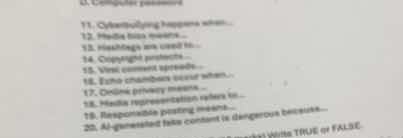
Question 11
Cyberbullying happens when... <blank>someone uses digital technology to harass, threaten, or humiliate another person repeatedly.</blank>
Question 12
Media bias means... <blank>the one-sided or unfair representation of information, events, or groups in media coverage.</blank>
Question 13
Hashtags are used to... <blank>categorize, organize, and make social media posts easily searchable by topic.</blank>
Question 14
Copyright protects... <blank>original creative works, such as writing, music, and art, from unauthorized use or reproduction.</blank>
Question 15
Viral content spreads... <blank>rapidly and widely across the internet from one user to another in a short period.</blank>
Question 16
Echo chambers occur when... <blank>people only encounter information or opinions that reflect and reinforce their own beliefs.</blank>
Question 17
Online privacy means... <blank>the right and ability of individuals to control how their personal data is collected and shared online.</blank>
Question 18
Media representation refers to... <blank>how different social groups, identities, and ideas are portrayed in media platforms.</blank>
Question 19
Responsible posting means... <blank>thinking critically about the accuracy, impact, and safety of content before sharing it online.</blank>
Question 20
AI-generated fake content is dangerous because... <blank>it can spread highly convincing misinformation, manipulate public opinion, and damage trust.</blank>