QUESTION IMAGE
Question
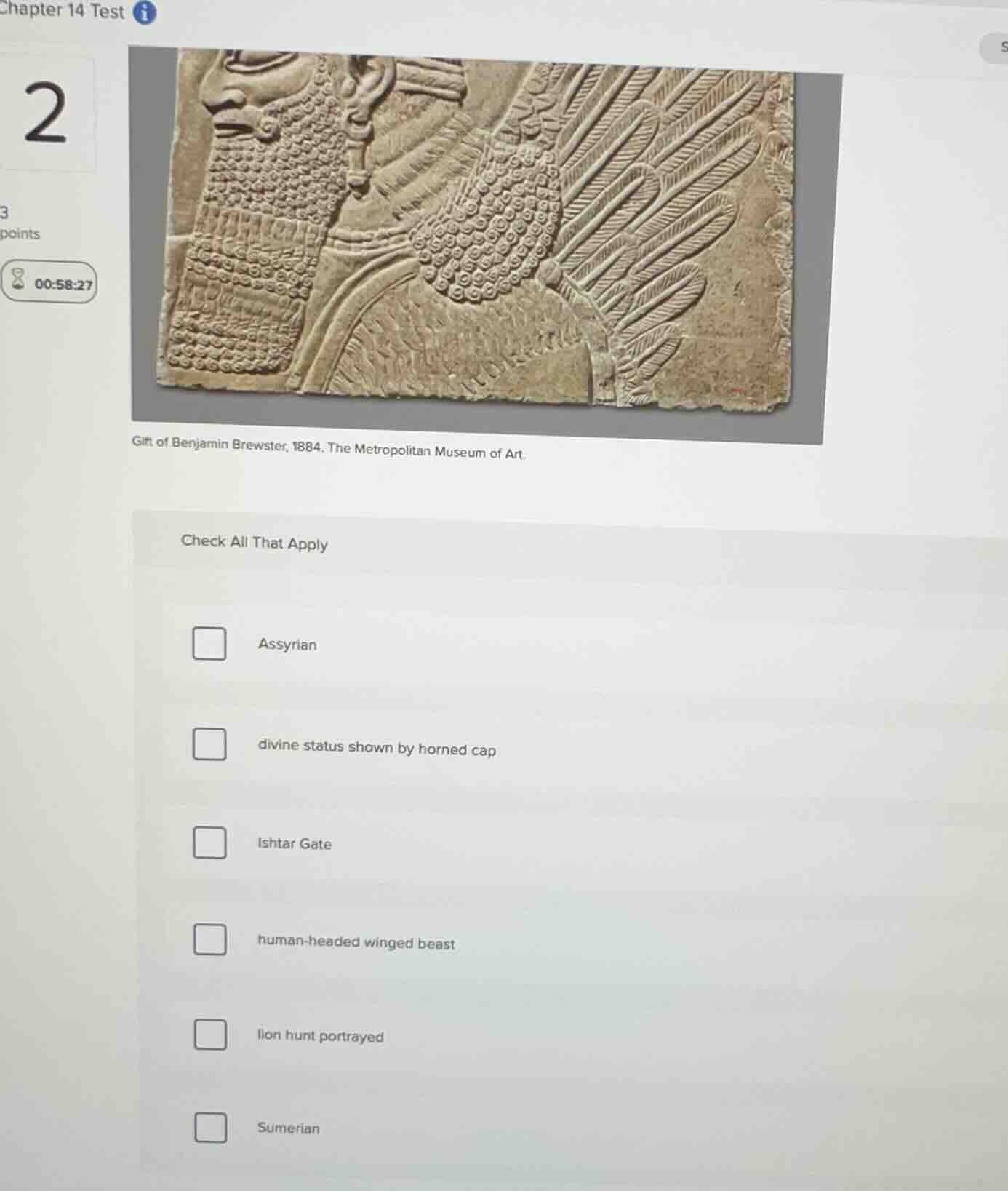
gift of benjamin brewster, 1884. the metropolitan museum of art.
check all that apply
- assyrian
- divine status shown by horned cap
- ishtar gate
- human-headed winged beast
- lion hunt portrayed
- sumerian
Identify the artwork
Using the Lamassu and Assyrian Art knowledge points, we recognize this relief sculpture as representing a Lamassu (a protective deity). It is a human-headed winged bull or lion from the Northwest Palace of Ashurnasirpal II at Nimrud (ancient Kalhu).
Analyze the cultural origin
Using the Ancient Near Eastern Art and Assyrian Art knowledge points, this relief is a classic example of Assyrian art from the Neo-Assyrian Empire (9th century BCE), not Sumerian.
Evaluate visual characteristics
Using the Lamassu knowledge point, we observe the following features:
- It is a human-headed winged beast (specifically a winged bull or lion).
- The figure wears a multi-horned headdress, which is a traditional Mesopotamian symbol indicating divine status shown by horned cap.
- It does not depict a lion hunt, nor is it associated with the Neo-Babylonian Ishtar Gate.

Snap & solve any problem in the app
Get step-by-step solutions on Sovi AI
Photo-based solutions with guided steps
Explore more problems and detailed explanations
- Assyrian (Correct answer)
- divine status shown by horned cap (Correct answer)
- Ishtar Gate
- human-headed winged beast (Correct answer)
- lion hunt portrayed
- Sumerian