QUESTION IMAGE
Question
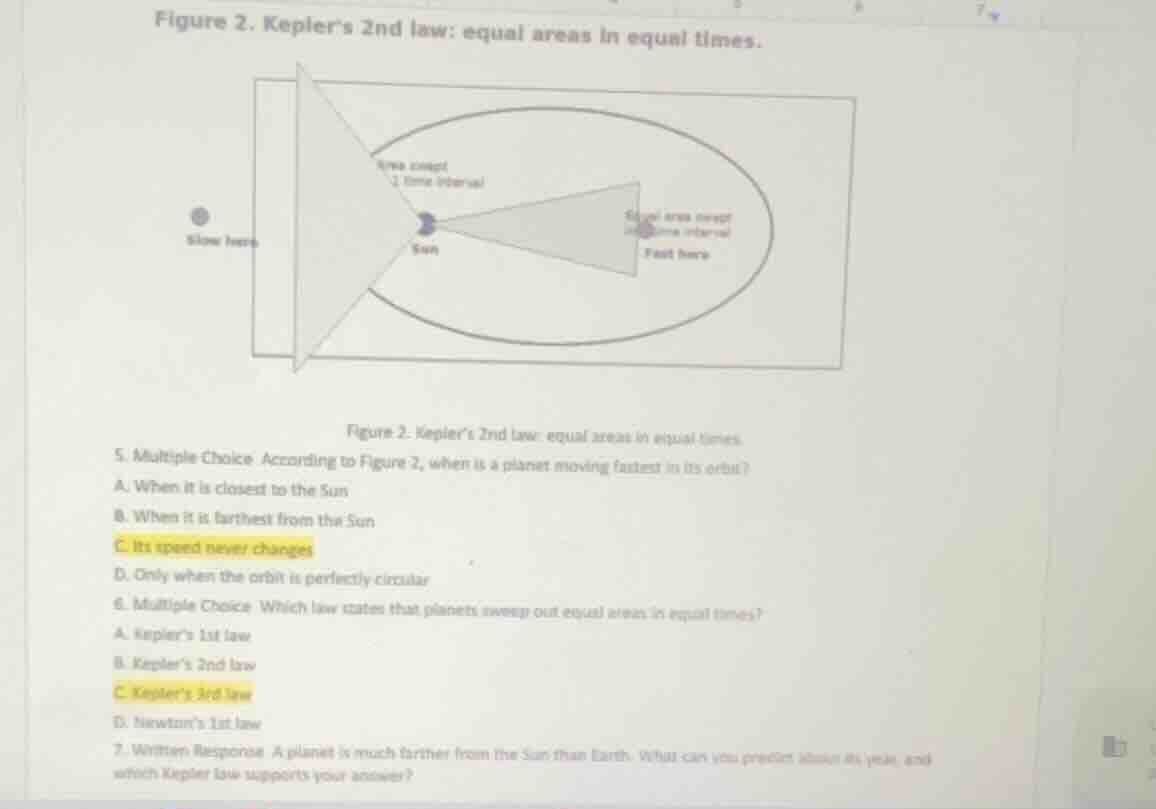
figure 2. keplers 2nd law: equal areas in equal times.
- multiple choice according to figure 2, when is a planet moving fastest in its orbit?
a. when it is closest to the sun
b. when it is farthest from the sun
c. its speed never changes
d. only when the orbit is perfectly circular
- multiple choice which law states that planets sweep out equal areas in equal times?
a. keplers 1st law
b. keplers 2nd law
c. keplers 3rd law
d. newtons 1st law
- written response a planet is much farther from the sun than earth. what can you predict about its year, and which kepler law supports your answer?
Analyze planet speed from Figure 2
$$
LATEXBLOCK0
$$
Identify the law of equal areas
$$
LATEXBLOCK1
$$
Predict orbital period for a distant planet
$$
LATEXBLOCK2
$$

Snap & solve any problem in the app
Get step-by-step solutions on Sovi AI
Photo-based solutions with guided steps
Explore more problems and detailed explanations
Question 5
- A. When it is closest to the Sun (Correct answer)
- B. When it is farthest from the Sun
- C. Its speed never changes
- D. Only when the orbit is perfectly circular
Question 6
- A. Kepler's 1st law
- B. Kepler's 2nd law (Correct answer)
- C. Kepler's 3rd law
- D. Newton's 1st law
Question 7
Its year (orbital period) will be much longer than Earth's year, supported by Kepler's 3rd law.