Sovi.AI - AI Math Tutor

Scan to solve math questions

QUESTION IMAGE

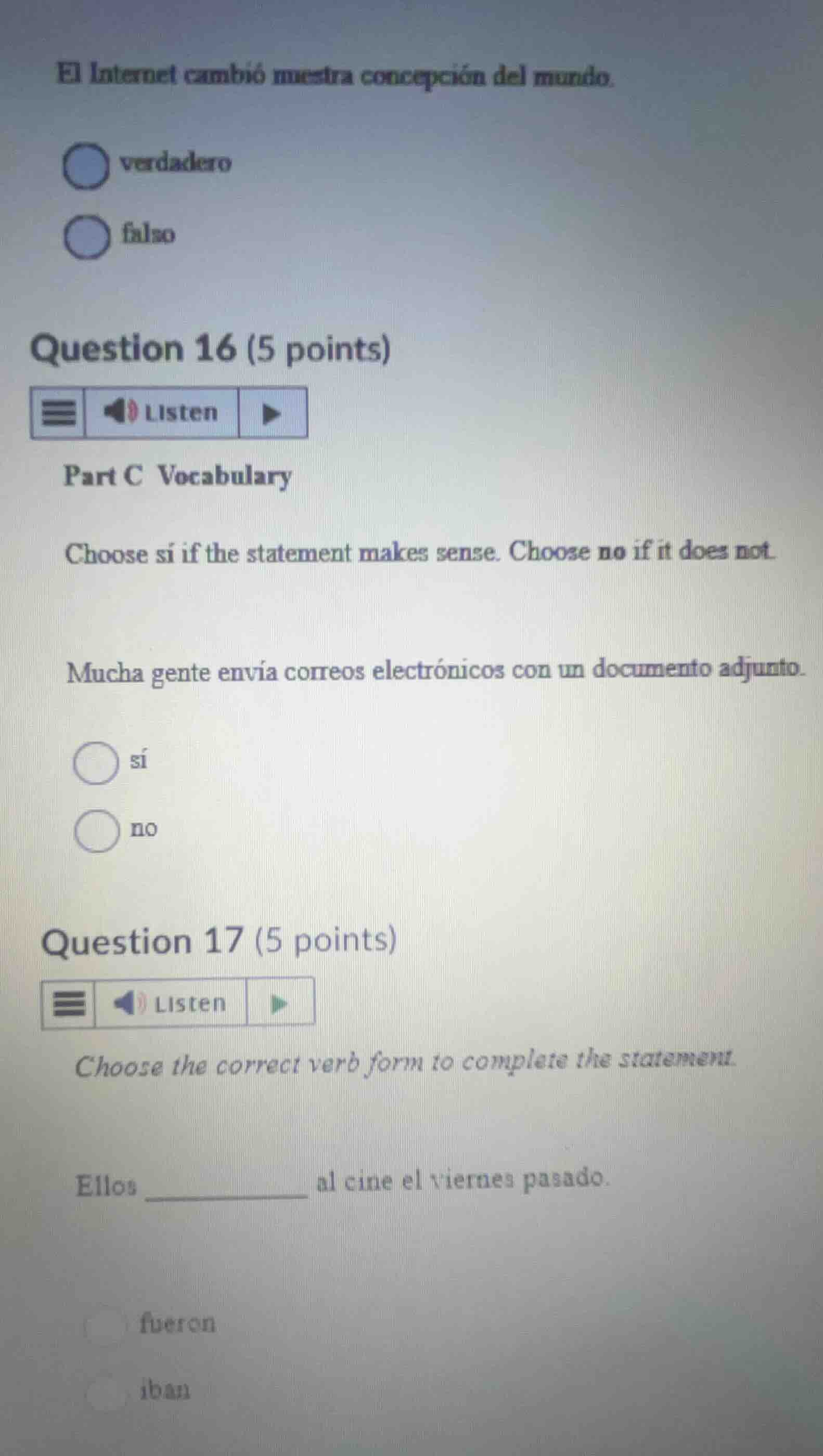
el internet cambió nuestra concepción del mundo. verdadero falso questi…

Question

el internet cambió nuestra concepción del mundo.

verdadero
falso

question 16 (5 points)
part c vocabulary

choose sí if the statement makes sense. choose no if it does not.

mucha gente envía correos electrónicos con un documento adjunto.


no

question 17 (5 points)

choose the correct verb form to complete the statement.

ellos ________ al cine el viernes pasado.

fueron
iban

Explanation:

Response

<pre_analysis>
{
"quality": "clear",
"question_count": 3,
"skills_matched": [
"direct_cot",
"multiple_choice_formatter",
"explain_then_answer",
"quick"
],
"needs_drawing": false,
"concepts_used": [],
"new_concepts": [
"Spanish Technology Vocabulary",
"Spanish Preterite vs Imperfect"
],
"current_concepts": [
"Spanish Technology Vocabulary",
"Spanish Preterite vs Imperfect",
"Spanish Verb Conjugation"
]
}
</pre_analysis>

<reasoning>

Analyze the first statement

The statement is "El Internet cambió nuestra concepción del mundo" (The Internet changed our conception of the world). This is a logically true statement.

Analyze Question 16

The statement is "Mucha gente envía correos electrónicos con un documento adjunto" (Many people send emails with an attached document). This is a logical and common action, so the statement makes sense ("sí").

Analyze Question 17

The sentence is "Ellos ________ al cine el viernes pasado" (They went to the cinema last Friday). The time marker "el viernes pasado" (last Friday) indicates a specific completed action in the past, requiring the preterite tense. The preterite third-person plural form of "ir" is "fueron".
</reasoning>

<answer>

Question 15

<mcq-correct>verdadero</mcq-correct>
<mcq-option>falso</mcq-option>

Question 16

<mcq-correct>sí</mcq-correct>
<mcq-option>no</mcq-option>

Question 17

<mcq-correct>fueron</mcq-correct>
<mcq-option>iban</mcq-option>
</answer>

<post_analysis>
{
"subject": "Others",
"question_type": "Multiple Choice",
"knowledge_point": [
"Others",
"Spanish",
"Spanish Grammar and Vocabulary"
]
}
</post_analysis>

Answer:

<pre_analysis>
{
"quality": "clear",
"question_count": 3,
"skills_matched": [
"direct_cot",
"multiple_choice_formatter",
"explain_then_answer",
"quick"
],
"needs_drawing": false,
"concepts_used": [],
"new_concepts": [
"Spanish Technology Vocabulary",
"Spanish Preterite vs Imperfect"
],
"current_concepts": [
"Spanish Technology Vocabulary",
"Spanish Preterite vs Imperfect",
"Spanish Verb Conjugation"
]
}
</pre_analysis>

<reasoning>

Analyze the first statement

The statement is "El Internet cambió nuestra concepción del mundo" (The Internet changed our conception of the world). This is a logically true statement.

Analyze Question 16

The statement is "Mucha gente envía correos electrónicos con un documento adjunto" (Many people send emails with an attached document). This is a logical and common action, so the statement makes sense ("sí").

Analyze Question 17

The sentence is "Ellos ________ al cine el viernes pasado" (They went to the cinema last Friday). The time marker "el viernes pasado" (last Friday) indicates a specific completed action in the past, requiring the preterite tense. The preterite third-person plural form of "ir" is "fueron".
</reasoning>

<answer>

Question 15

<mcq-correct>verdadero</mcq-correct>
<mcq-option>falso</mcq-option>

Question 16

<mcq-correct>sí</mcq-correct>
<mcq-option>no</mcq-option>

Question 17

<mcq-correct>fueron</mcq-correct>
<mcq-option>iban</mcq-option>
</answer>

<post_analysis>
{
"subject": "Others",
"question_type": "Multiple Choice",
"knowledge_point": [
"Others",
"Spanish",
"Spanish Grammar and Vocabulary"
]
}
</post_analysis>