QUESTION IMAGE
Question
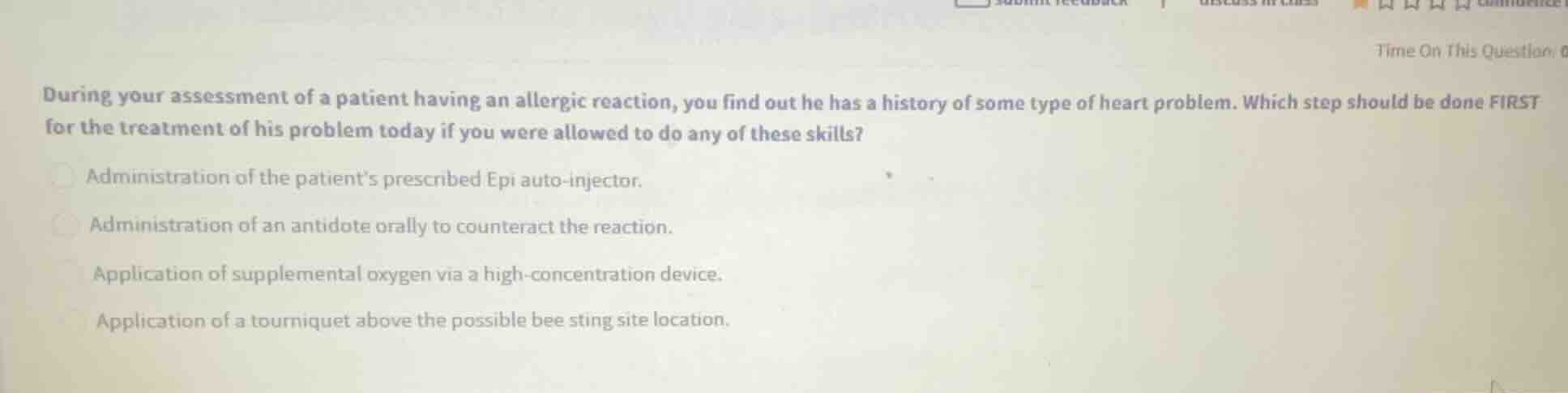
during your assessment of a patient having an allergic reaction, you find out he has a history of some type of heart problem. which step should be done first for the treatment of his problem today if you were allowed to do any of these skills?
administration of the patients prescribed epi auto-injector.
administration of an antidote orally to counteract the reaction.
application of supplemental oxygen via a high-concentration device.
application of a tourniquet above the possible bee sting site location.
Identify the clinical priority
Using the Anaphylaxis Management and Oxygen Delivery Devices knowledge points
- The patient is experiencing an allergic reaction and has a history of a heart condition.
- Epinephrine (Epi auto-injector) is a powerful vasoconstrictor and bronchodilator that increases heart rate and myocardial oxygen demand, which poses risks for patients with cardiovascular disease.
- In emergency care, oxygen administration is the initial, non-invasive step to support oxygenation before administering medications that increase cardiac workload.
- Administering high-concentration supplemental oxygen (e.g., via a non-rebreather mask) is the safest and most appropriate first action to stabilize the patient's respiratory status.
Evaluate the alternative options
- Oral antidotes do not exist for acute, severe allergic reactions in the prehospital setting.
- Tourniquets are not indicated for bee stings and can cause localized tissue damage.
- Administering epinephrine is a critical step if anaphylaxis is present, but supplemental oxygen is initiated first to mitigate hypoxia and support cardiac perfusion, especially given the cardiac history.

Snap & solve any problem in the app
Get step-by-step solutions on Sovi AI
Photo-based solutions with guided steps
Explore more problems and detailed explanations
- Administration of the patient's prescribed Epi auto-injector.
- Administration of an antidote orally to counteract the reaction.
- Application of supplemental oxygen via a high-concentration device. (Correct answer)
- Application of a tourniquet above the possible bee sting site location.