QUESTION IMAGE
Question
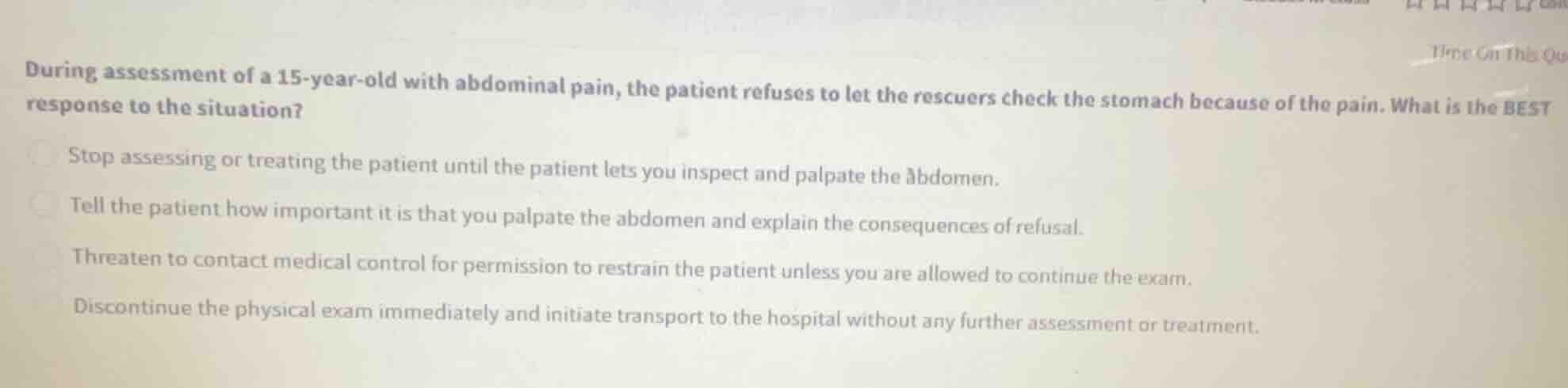
during assessment of a 15-year-old with abdominal pain, the patient refuses to let the rescuers check the stomach because of the pain. what is the best response to the situation?
stop assessing or treating the patient until the patient lets you inspect and palpate the abdomen.
tell the patient how important it is that you palpate the abdomen and explain the consequences of refusal.
threaten to contact medical control for permission to restrain the patient unless you are allowed to continue the exam.
discontinue the physical exam immediately and initiate transport to the hospital without any further assessment or treatment.
Analyze the clinical scenario
The patient is a 15-year-old experiencing abdominal pain who refuses a physical examination of the stomach due to fear of pain. In emergency medical services, patients have the right to refuse specific parts of an assessment or treatment, but the provider must attempt to gain consent through education and communication.
Evaluate the options
Using the Patient Refusal Protocols and Therapeutic Communication knowledge points:
- Option 1 ("Stop assessing or treating..."): This is inappropriate because it unnecessarily delays care and abandons the patient instead of attempting to build rapport or explain the necessity of the exam.
- Option 2 ("Tell the patient how important..."): This is the correct approach. Explaining the clinical importance of the abdominal exam and the potential consequences of refusing it helps the patient make an informed decision and often alleviates anxiety.
- Option 3 ("Threaten to contact medical control..."): Threatening a patient with physical restraint for a non-life-threatening assessment refusal is unethical, illegal, and violates patient autonomy.
- Option 4 ("Discontinue the physical exam immediately and initiate transport..."): While transport is necessary, completely stopping all other assessments or treatments without trying to communicate or explain the situation first is not the best initial response.
Select the best response
Using the Therapeutic Communication knowledge point, explaining the clinical significance of the exam and the risks of refusal is the standard first step in managing a patient's refusal of a specific assessment procedure.

Snap & solve any problem in the app
Get step-by-step solutions on Sovi AI
Photo-based solutions with guided steps
Explore more problems and detailed explanations
- (A) Stop assessing or treating the patient until the patient lets you inspect and palpate the abdomen.
- (B) Tell the patient how important it is that you palpate the abdomen and explain the consequences of refusal. (Correct answer)
- (C) Threaten to contact medical control for permission to restrain the patient unless you are allowed to continue the exam.
- (D) Discontinue the physical exam immediately and initiate transport to the hospital without any further assessment or treatment.