QUESTION IMAGE
Question
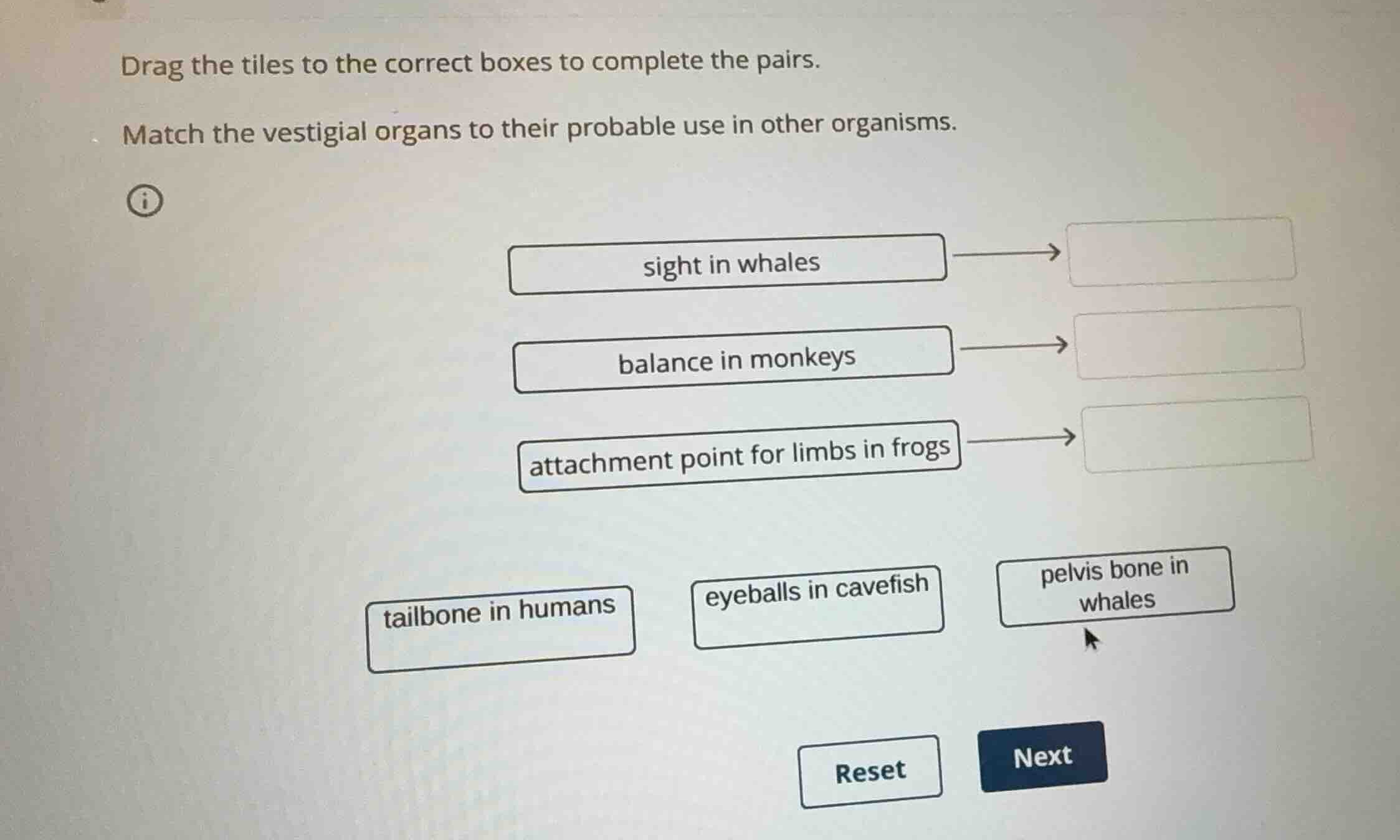
drag the tiles to the correct boxes to complete the pairs.
match the vestigial organs to their probable use in other organisms.
sight in whales
balance in monkeys
attachment point for limbs in frogs
tailbone in humans
eyeballs in cavefish
pelvis bone in whales
Analizar la función original de la vista
Using the Vestigial Structures knowledge point
- Función probable: "sight in whales" (la vista en las ballenas).
- Órgano vestigial correspondiente: "eyeballs in cavefish" (los globos oculares en los peces de cueva). Los peces de cueva viven en oscuridad total y tienen ojos vestigiales no funcionales, mientras que las ballenas y otros vertebrados usan los ojos para ver.
Analizar la función original del equilibrio
Using the Vestigial Structures knowledge point
- Función probable: "balance in monkeys" (el equilibrio en los monos).
- Órgano vestigial correspondiente: "tailbone in humans" (el coxis en los humanos). El coxis es el vestigio de una cola, la cual es utilizada por los monos para mantener el equilibrio.
Analizar la función original de la pelvis
Using the Vestigial Structures in Cetaceans and Vestigial Structures knowledge points
- Función probable: "attachment point for limbs in frogs" (punto de unión para las extremidades en las ranas).
- Órgano vestigial correspondiente: "pelvis bone in whales" (el hueso de la pelvis en las ballenas). La pelvis sirve para articular las extremidades posteriores en tetrápodos como las ranas, pero en las ballenas es una estructura vestigial flotante que ya no sostiene extremidades traseras funcionales.

Snap & solve any problem in the app
Get step-by-step solutions on Sovi AI
Photo-based solutions with guided steps
Explore more problems and detailed explanations
| Probable use in other organisms | Vestigial organ |
|---|---|
| balance in monkeys | tailbone in humans |
| attachment point for limbs in frogs | pelvis bone in whales |