QUESTION IMAGE
Question
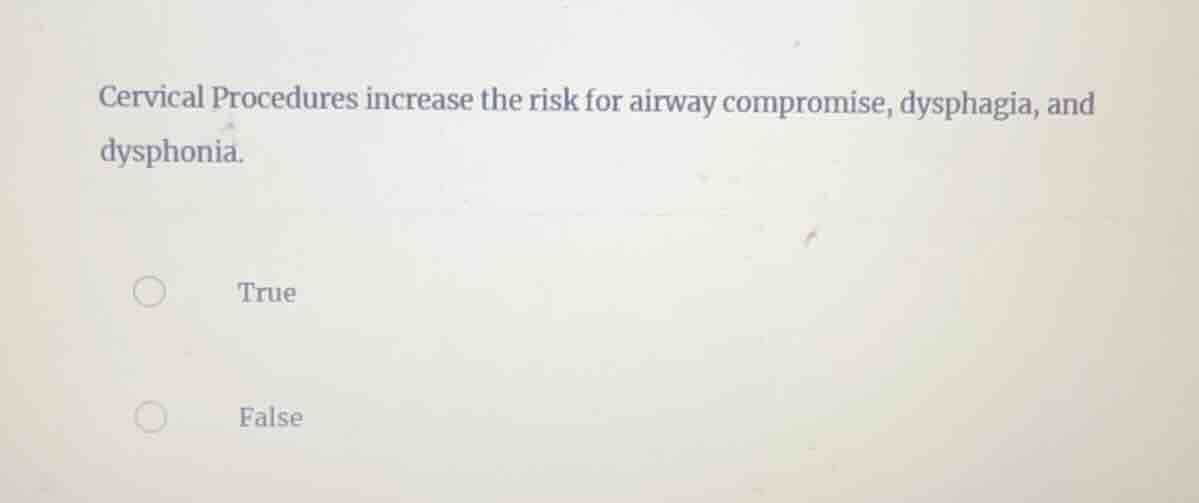
cervical procedures increase the risk for airway compromise, dysphagia, and dysphonia.
true
false
Analyze anatomical proximity of cervical procedures
Cervical spine surgeries and procedures are performed in close anatomical proximity to the trachea, esophagus, and recurrent laryngeal nerve.
Evaluate airway compromise risk
Retraction of anterior neck structures during surgery can lead to localized edema, hematoma formation, or direct airway obstruction, significantly increasing the risk of postoperative airway compromise.
Evaluate dysphagia and dysphonia risks
Temporary or permanent damage to the recurrent laryngeal nerve during retraction can cause vocal cord paresis, leading to dysphonia (hoarseness). Additionally, esophageal retraction and pharyngeal edema frequently result in dysphagia (difficulty swallowing).
Synthesize clinical evidence
Because cervical procedures directly impact the anatomical pathways responsible for breathing, swallowing, and speaking, they inherently increase the risks of airway compromise, dysphagia, and dysphonia.

Snap & solve any problem in the app
Get step-by-step solutions on Sovi AI
Photo-based solutions with guided steps
Explore more problems and detailed explanations
- True (Correct answer)
- False