QUESTION IMAGE
Question
cellular respiration
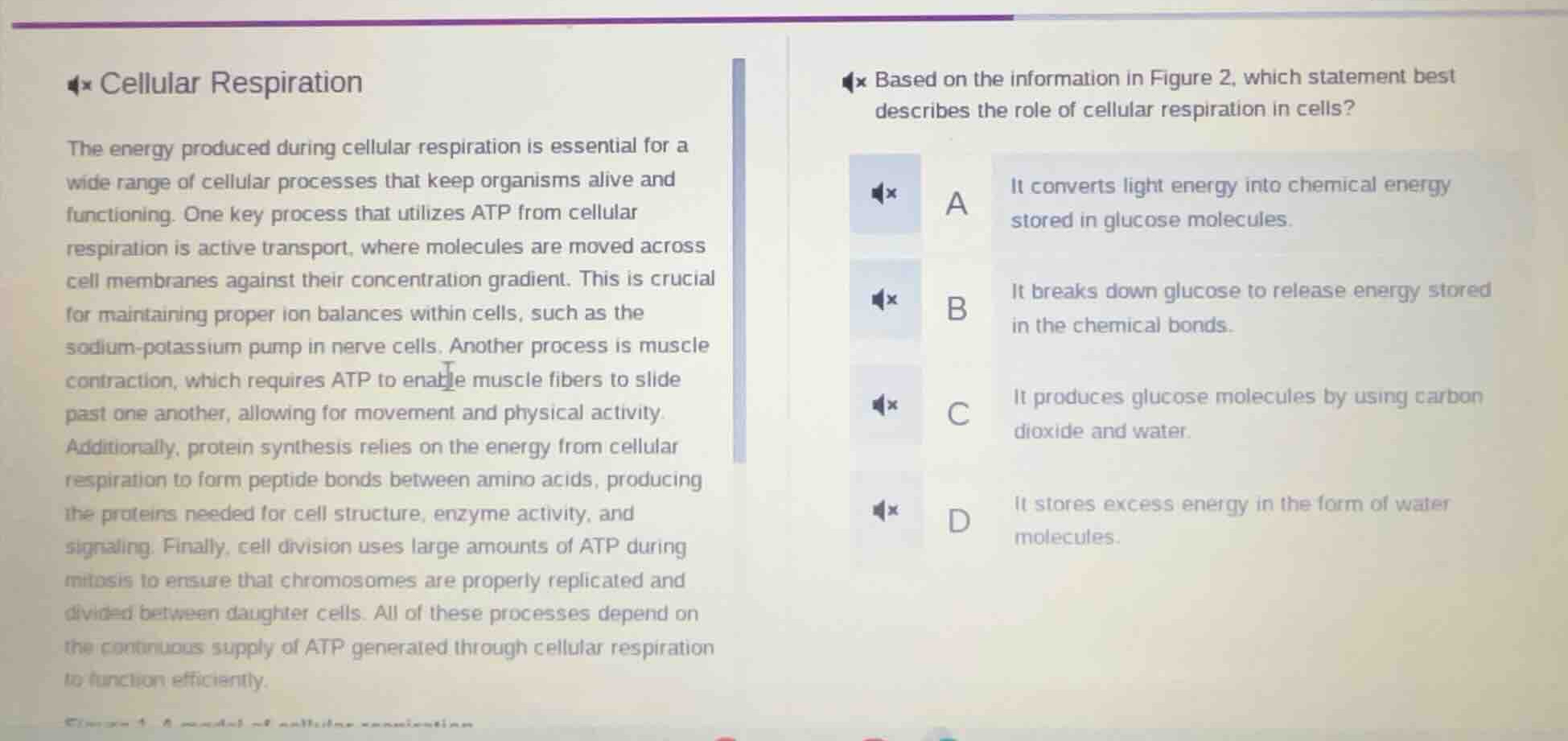
the energy produced during cellular respiration is essential for a wide range of cellular processes that keep organisms alive and functioning. one key process that utilizes atp from cellular respiration is active transport, where molecules are moved across cell membranes against their concentration gradient. this is crucial for maintaining proper ion balances within cells, such as the sodium-potassium pump in nerve cells. another process is muscle contraction, which requires atp to enable muscle fibers to slide past one another, allowing for movement and physical activity. additionally, protein synthesis relies on the energy from cellular respiration to form peptide bonds between amino acids, producing the proteins needed for cell structure, enzyme activity, and signaling. finally, cell division uses large amounts of atp during mitosis to ensure that chromosomes are properly replicated and divided between daughter cells. all of these processes depend on the continuous supply of atp generated through cellular respiration to function efficiently.
based on the information in figure 2, which statement best describes the role of cellular respiration in cells?
a it converts light energy into chemical energy stored in glucose molecules.
b it breaks down glucose to release energy stored in the chemical bonds.
c it produces glucose molecules by using carbon dioxide and water.
d it stores excess energy in the form of water molecules.
Cellular respiration is a metabolic process that occurs in the cells of organisms to convert biochemical energy from nutrients, primarily glucose, into adenosine triphosphate (ATP). During this process, the chemical bonds of glucose are broken down, and the energy released is captured in the form of ATP, which the cell then uses to power various functions such as active transport, muscle contraction, and protein synthesis. Options A and C describe photosynthesis, while option D is scientifically incorrect as water is a byproduct, not an energy storage molecule.

Snap & solve any problem in the app
Get step-by-step solutions on Sovi AI
Photo-based solutions with guided steps
Explore more problems and detailed explanations
B. It breaks down glucose to release energy stored in the chemical bonds.