QUESTION IMAGE
Question
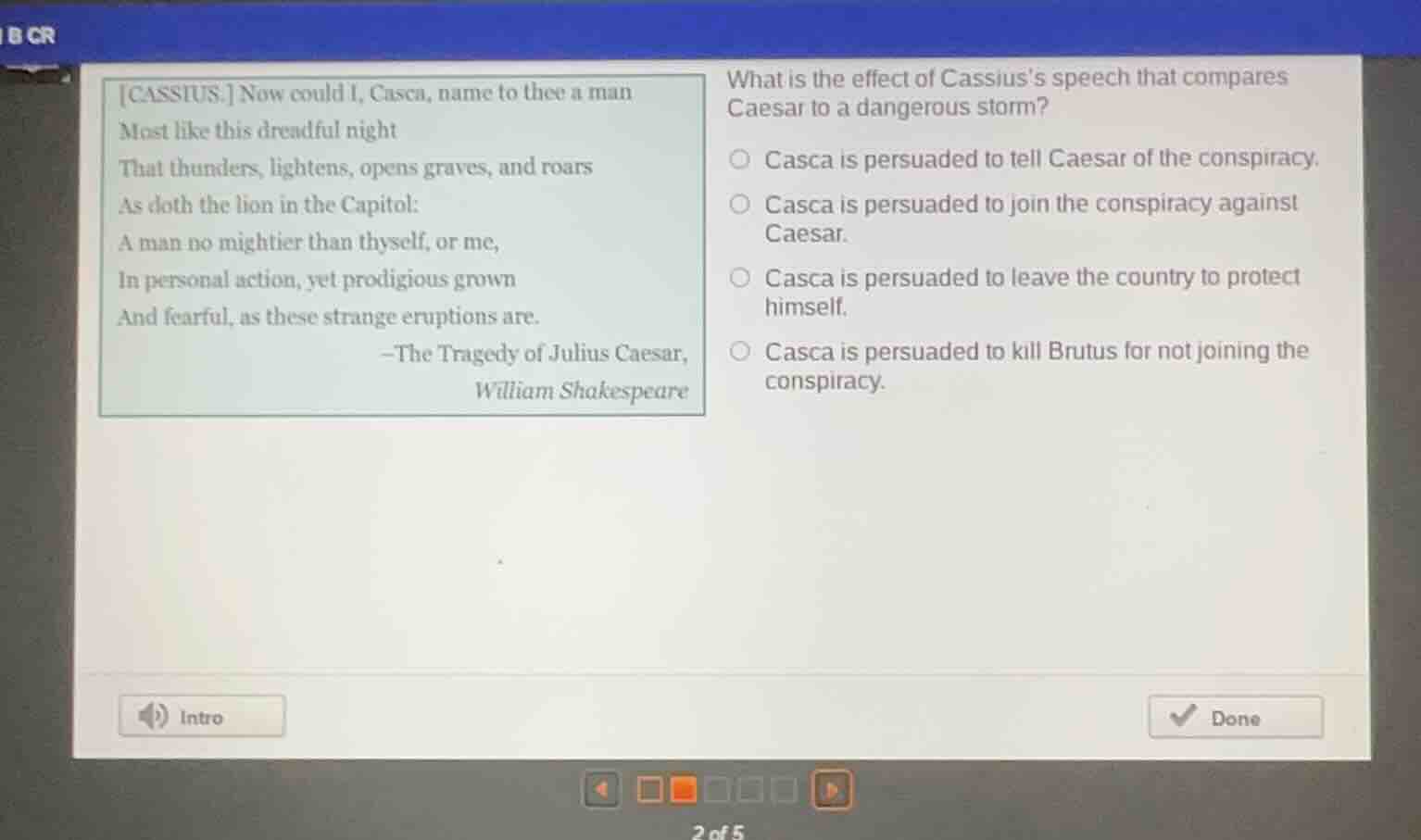
cassius. now could i, casca, name to thee a man
most like this dreadful night
that thunders, lightens, opens graves, and roars
as doth the lion in the capitol;
a man no mightier than thyself, or me,
in personal action, yet prodigious grown
and fearful, as these strange eruptions are.
-the tragedy of julius caesar,
william shakespeare
what is the effect of cassiuss speech that compares caesar to a dangerous storm?
casca is persuaded to tell caesar of the conspiracy.
casca is persuaded to join the conspiracy against caesar.
casca is persuaded to leave the country to protect himself.
casca is persuaded to kill brutus for not joining the conspiracy.
Analyze the speech context
Using the Julius Caesar Plot knowledge point, this scene takes place during a terrible storm in Rome. Cassius uses the ominous weather to convince Casca that the gods are angry about Caesar's growing power, comparing Caesar directly to the dreadful night.
Determine Cassius's intent
Using the Drama Analysis knowledge point, Cassius's goal in comparing Caesar to the storm is to recruit Casca. He wants to show that Caesar is a threat to the Republic who must be stopped.
Evaluate the options
- Option 1 suggests Casca warns Caesar, which is incorrect.
- Option 2 states Casca is persuaded to join the conspiracy, which aligns with Cassius's goal.
- Option 3 suggests Casca flees, which is incorrect.
- Option 4 suggests Casca is persuaded to kill Brutus, which is incorrect.
Formulate the conclusion
The comparison successfully influences Casca, leading him to join the conspiracy against Caesar.

Snap & solve any problem in the app
Get step-by-step solutions on Sovi AI
Photo-based solutions with guided steps
Explore more problems and detailed explanations
- Casca is persuaded to tell Caesar of the conspiracy.
- Casca is persuaded to join the conspiracy against Caesar. (Correct answer)
- Casca is persuaded to leave the country to protect himself.
- Casca is persuaded to kill Brutus for not joining the conspiracy.