QUESTION IMAGE
Question
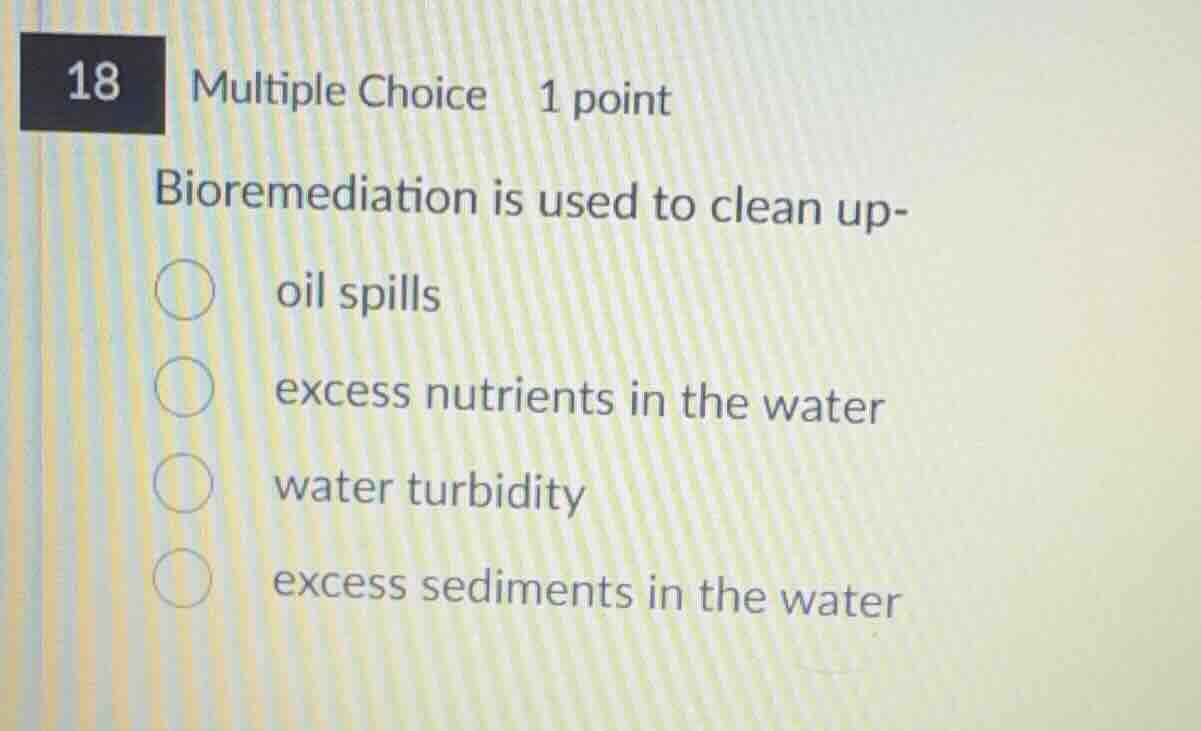
bioremediation is used to clean up-
oil spills
excess nutrients in the water
water turbidity
excess sediments in the water
Define bioremediation
Bioremediation is a waste management technique that involves the use of organisms (usually microorganisms like bacteria, fungi, or plants) to neutralize or remove pollutants from a contaminated site.
Evaluate the options
- oil spills: Microorganisms can naturally metabolize hydrocarbons present in petroleum, breaking them down into harmless substances like carbon dioxide and water. This is a classic and widely used application of bioremediation.
- excess nutrients in the water: While plants and algae absorb nutrients, excess nutrients are typically managed through watershed management, reduction of fertilizer runoff, or physical/chemical treatment rather than targeted bioremediation.
- water turbidity: Turbidity refers to water cloudiness caused by suspended solids, which is treated by physical filtration or chemical coagulation/flocculation.
- excess sediments in the water: Sediments are physical particles that settle out of water naturally or are removed via physical settling basins and filtration, not biological degradation.
Select the correct option
The primary and most direct application among the choices is the cleanup of oil spills.

Snap & solve any problem in the app
Get step-by-step solutions on Sovi AI
Photo-based solutions with guided steps
Explore more problems and detailed explanations
- oil spills (Correct answer)
- excess nutrients in the water
- water turbidity
- excess sediments in the water