QUESTION IMAGE
Question
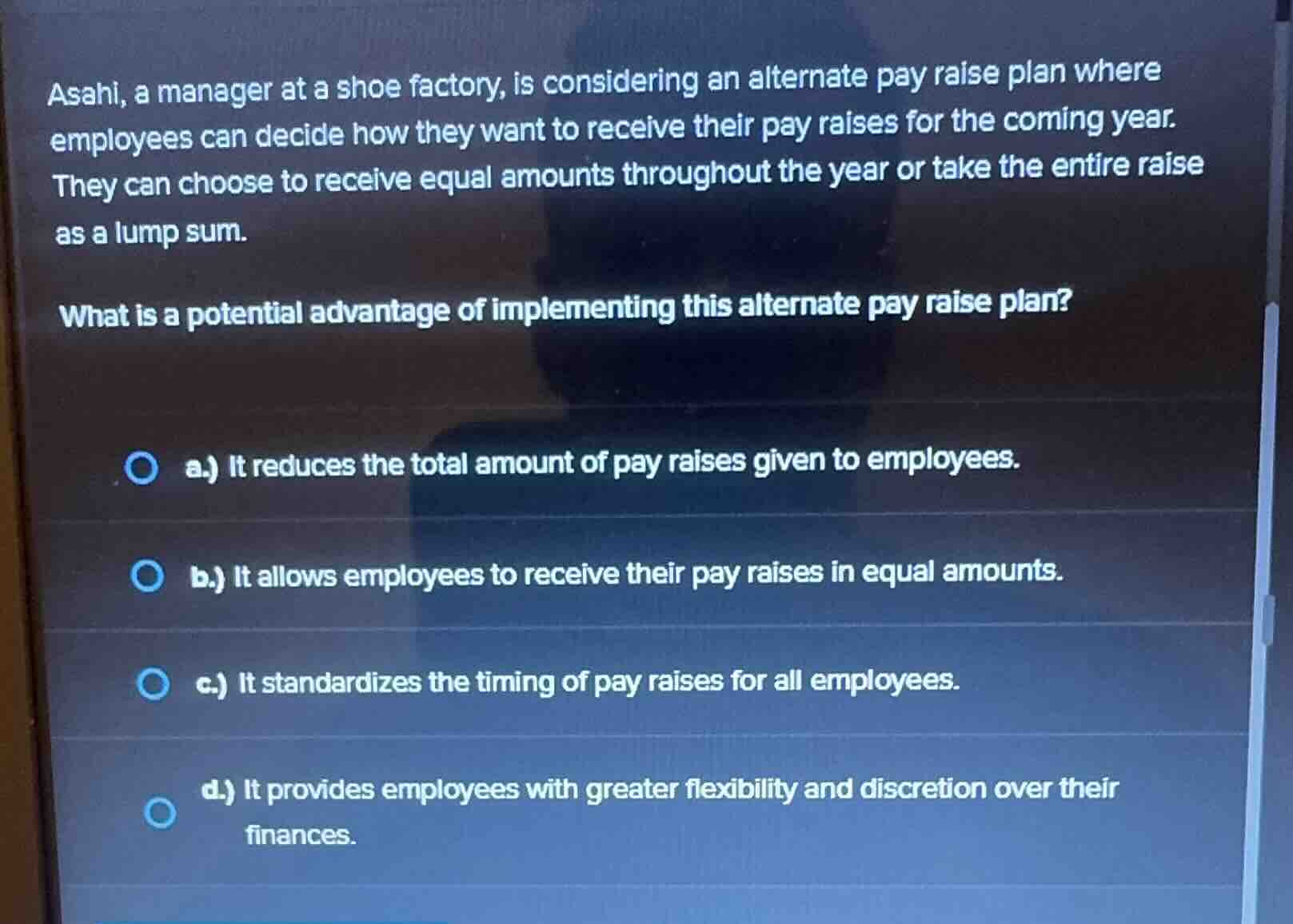
asahi, a manager at a shoe factory, is considering an alternate pay raise plan where employees can decide how they want to receive their pay raises for the coming year. they can choose to receive equal amounts throughout the year or take the entire raise as a lump sum.
what is a potential advantage of implementing this alternate pay raise plan?
a.) it reduces the total amount of pay raises given to employees.
b.) it allows employees to receive their pay raises in equal amounts.
c.) it standardizes the timing of pay raises for all employees.
d.) it provides employees with greater flexibility and discretion over their finances.
Analyze the proposed pay raise plan
Using the Salary Administration knowledge point, we evaluate the alternate pay raise plan. Asahi is offering employees a choice in how they receive their pay raises: either distributed equally throughout the year or as a single lump sum. This choice directly impacts how employees manage their personal cash flow and financial planning.
Evaluate the options
- Option a: Offering a choice does not inherently reduce the total amount of pay raises given; the total value of the raise remains the same.
- Option b: While it does allow employees to receive equal amounts, this is simply one of the choices rather than a unique advantage of implementing the alternate choice-based plan itself (since standard plans already distribute raises equally).
- Option c: Offering choices actually customizes and varies the timing of pay raises among employees, rather than standardizing it.
- Option d: Giving employees the autonomy to choose between a lump sum or distributed payments directly provides them with greater flexibility and discretion over their personal finances, aligning with modern employee-centric compensation strategies.

Snap & solve any problem in the app
Get step-by-step solutions on Sovi AI
Photo-based solutions with guided steps
Explore more problems and detailed explanations
- a.) It reduces the total amount of pay raises given to employees.
- b.) It allows employees to receive their pay raises in equal amounts.
- c.) It standardizes the timing of pay raises for all employees.
- d.) It provides employees with greater flexibility and discretion over their finances. (Correct answer)