QUESTION IMAGE
Question
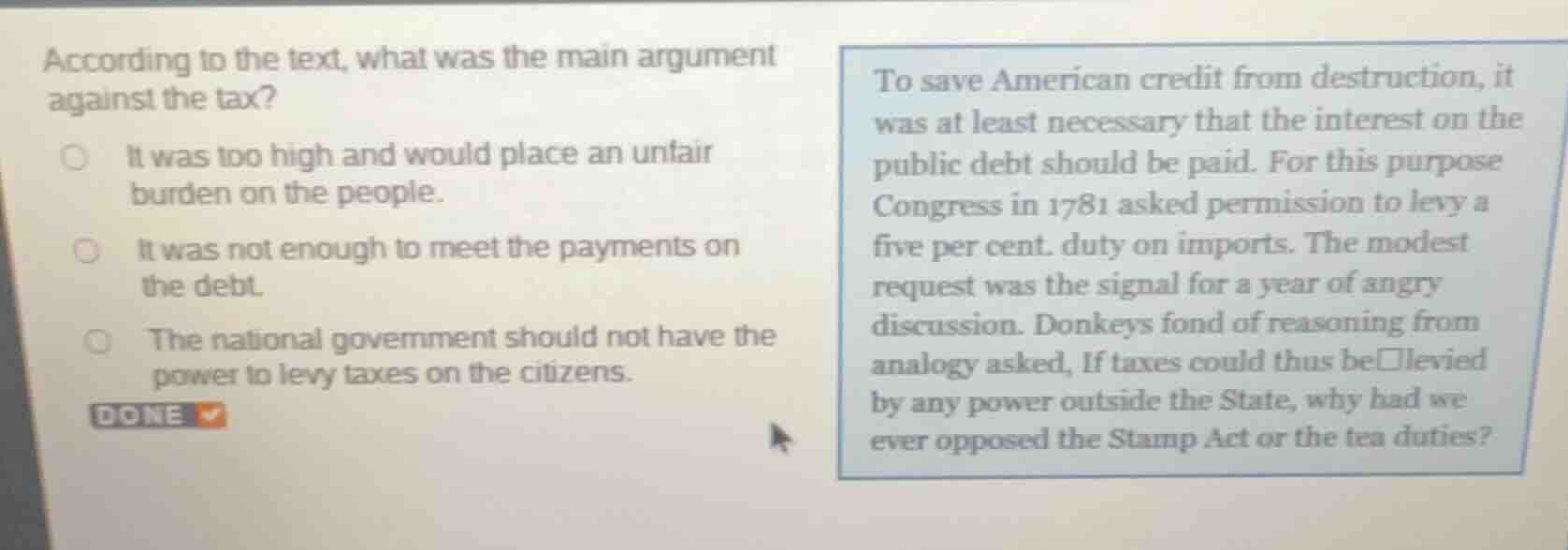
according to the text, what was the main argument against the tax?
it was too high and would place an unfair burden on the people.
it was not enough to meet the payments on the debt.
the national government should not have the power to levy taxes on the citizens.
done
to save american credit from destruction, it was at least necessary that the interest on the public debt should be paid. for this purpose congress in 1781 asked permission to levy a five per cent. duty on imports. the modest request was the signal for a year of angry discussion. donkeys fond of reasoning from analogy asked, if taxes could thus be levied by any power outside the state, why had we ever opposed the stamp act or the tea duties?
The text states opponents argued that if a national (outside state) power could levy taxes, there was no reason the Stamp Act/tea duties were opposed, which centers on rejecting the national government's tax power over citizens.

Snap & solve any problem in the app
Get step-by-step solutions on Sovi AI
Photo-based solutions with guided steps
Explore more problems and detailed explanations
The national government should not have the power to levy taxes on the citizens.