QUESTION IMAGE
Question
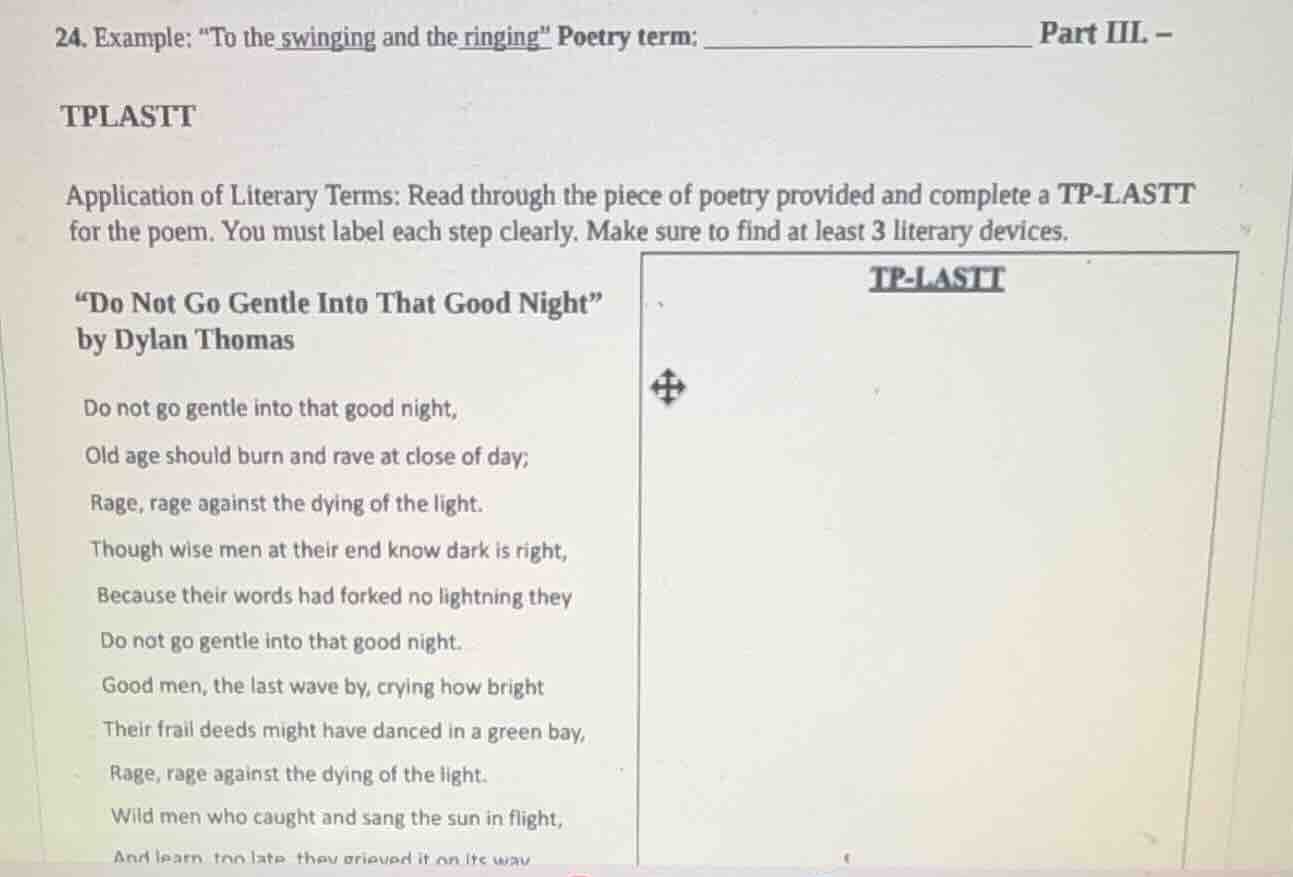
- example: “to the swinging and the ringing” poetry term: _________________ part iii. – tplastt application of literary terms: read through the piece of poetry provided and complete a tp - lastt for the poem. you must label each step clearly. make sure to find at least 3 literary devices. “do not go gentle into that good night” by dylan thomas do not go gentle into that good night, old age should burn and rave at close of day; rage, rage against the dying of the light. though wise men at their end know dark is right, because their words had forked no lightning they do not go gentle into that good night. good men, the last wave by, crying how bright their frail deeds might have danced in a green bay, rage, rage against the dying of the light. wild men who caught and sang the sun in flight, and learn too late they grieved it on its way
Brief Explanations
First, identify the literary term for "To the swinging and the ringing": this uses repeated ending sounds of words, which is consonance. For the TP-LASTT analysis of Do Not Go Gentle Into That Good Night:
- Title (T): The title establishes the poem's core conflict—resisting death ("good night" as a metaphor for death) instead of accepting it passively.
- Paraphrase (P): The poem urges all men (wise, good, wild) to fight against death rather than submit quietly, even as they face their end.
- Literary Devices (L):
- Repetition: Phrases like "Do not go gentle into that good night" and "Rage, rage against the dying of the light" are repeated to emphasize the urgent call to resist death.
- Metaphor: "Good night" is a metaphor for death, and "dying of the light" metaphorizes the end of life.
- Imagery: "Old age should burn and rave at close of day" uses visual imagery of fire/ferocity to depict resisting death.
- Attitude (A): The speaker has a passionate, urgent, defiant attitude, fueled by grief and a desire to urge others to fight against the end of life.
- Shifts (S): The poem shifts between addressing different groups of men (wise, good, wild) to show that all people, regardless of their life choices, should resist death, before likely turning to a personal address to the speaker's father (implied later in the full poem).
- Theme (T): The central theme is the human struggle to resist death and embrace life fiercely until the very end.
- Tone (T): The tone is urgent, impassioned, and pleading, as the speaker begs for resistance against death.

Snap & solve any problem in the app
Get step-by-step solutions on Sovi AI
Photo-based solutions with guided steps
Explore more problems and detailed explanations
- Poetry term for "To the swinging and the ringing": Consonance
- TP-LASTT Analysis:
- Title: Establishes core conflict: resist death.
- Paraphrase: Urges all men to fight death, not submit.
- Literary Devices:
- Repetition: "Do not go gentle..." and "Rage, rage..." repeated for emphasis.
- Metaphor: "Good night" = death; "dying of the light" = end of life.
- Imagery: "Old age should burn and rave" uses fiery visual imagery.
- Attitude: Passionate, defiant, urgent.
- Shifts: Moves between addressing wise, good, wild men to broaden the call to resist death.
- Theme: Fierce human resistance to death.
- Tone: Urgent, impassioned, pleading.